Eight billion litres of water saved through using treated effluent
06 April 2026
With dam levels currently below 50%, it’s more important than ever to use our drinking water wisely. As rainfall remains unpredictable this year, every drop counts. One practical way residents and businesses can help is by using treated effluent for non-drinking purposes like irrigation and industrial activities. Not only does this reduce pressure on our potable water supply, but it can also lower costs for users.
Thanks to the growing uptake of treated effluent, the City’s Water and Sanitation Directorate, together with residents and businesses, is now saving more than eight billion litres of drinking water every year.
The City’s Mayoral Committee Member for Water and Sanitation, Councillor Zahid Badroodien, recently visited the treated effluent reuse (TER) pump stations in Bellville and Scottsdene, along with the Water Demand Management and Regulation team, to see the systems in action.
What is treated effluent?
Treated effluent is wastewater that has undergone a rigorous treatment process at wastewater treatment works to remove contaminants, making it safe for discharge into the environment. A portion of this water is further filtered and supplied to customers for non-drinking uses.
- It is supplied from nine City wastewater treatment plants: Athlone, Bellville, Cape Flats, Kraaifontein, Macassar, Potsdam, Scottsdene, Zandvliet and Melkbosstrand.
- It is more affordable than drinking water.
- It is strictly for non-potable uses such as irrigation and industrial activities.
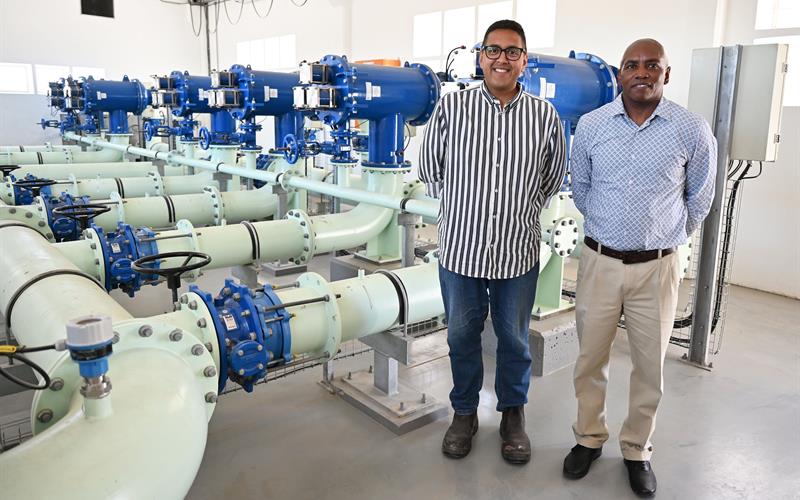
Bellville TER pump station
The Bellville TER pump station and filtration facility, located at the Bellville wastewater treatment works, was commissioned in March 2025. It currently supplies around 4,3 million litres of treated effluent per day to users along a network that stretches approximately 15 km.
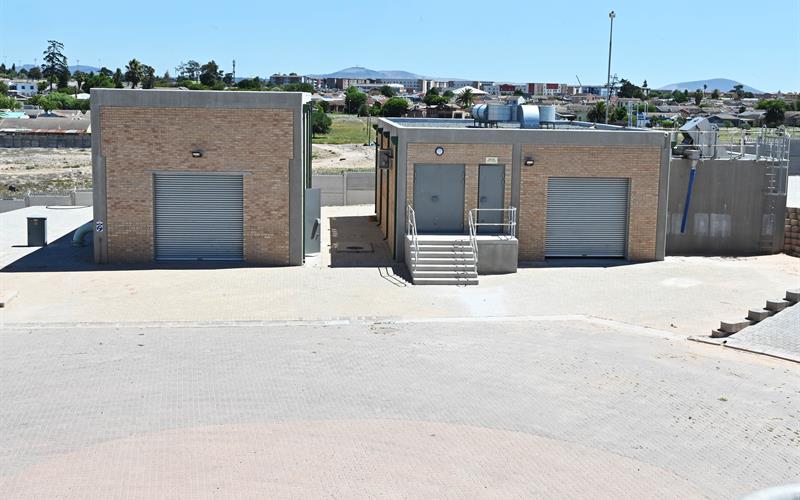
Scottsdene TER pump station
Construction of the Scottsdene TER pump station began in September 2023 and was completed in December 2025.
Once fully commissioned by the end of April 2026, the facility will be able to supply up to six million litres of treated effluent per day. The associated network, expected to extend about 14 km, will significantly increase access to treated effluent in the area.
Industries, sports facilities, parks, developments and schools in areas including Bellville Industria, Bellville South, Stikland, Glenhaven, Kuils River, Scottsdene, Northpine, Wallacedene, Brackenfell and Protea Heights are encouraged to explore this alternative with the City.
Expanding access to treated effluent
The City continues to invest in expanding its treated effluent infrastructure.
Construction of the R36 million Zandvliet TER pump station, which started in September 2024, is now 85% complete and remains on track for completion by the end of September 2026.
In addition, network expansion projects in Scottsdene and Kuils River are under way, including new end-user connections to make treated effluent more accessible.
Currently, 345 users across a 330 km network are making use of treated effluent for non-potable purposes. This number is expected to grow as more infrastructure comes online.
‘We should only be using drinking water for essential purposes.
‘This long-standing initiative forms part of the City’s broader vision of becoming a water-sensitive city that protects its water resources, uses water more efficiently and embraces alternatives like treated effluent for appropriate uses.
‘To support this, we are continuously expanding our network so that more customers can access treated effluent. We encourage businesses and institutions to consider this option to help save both water and money,’ said Councillor Badroodien.
For more information on how to access treated effluent from the City, visit the City's website.
End
Published by:
City of Cape Town, Media Office